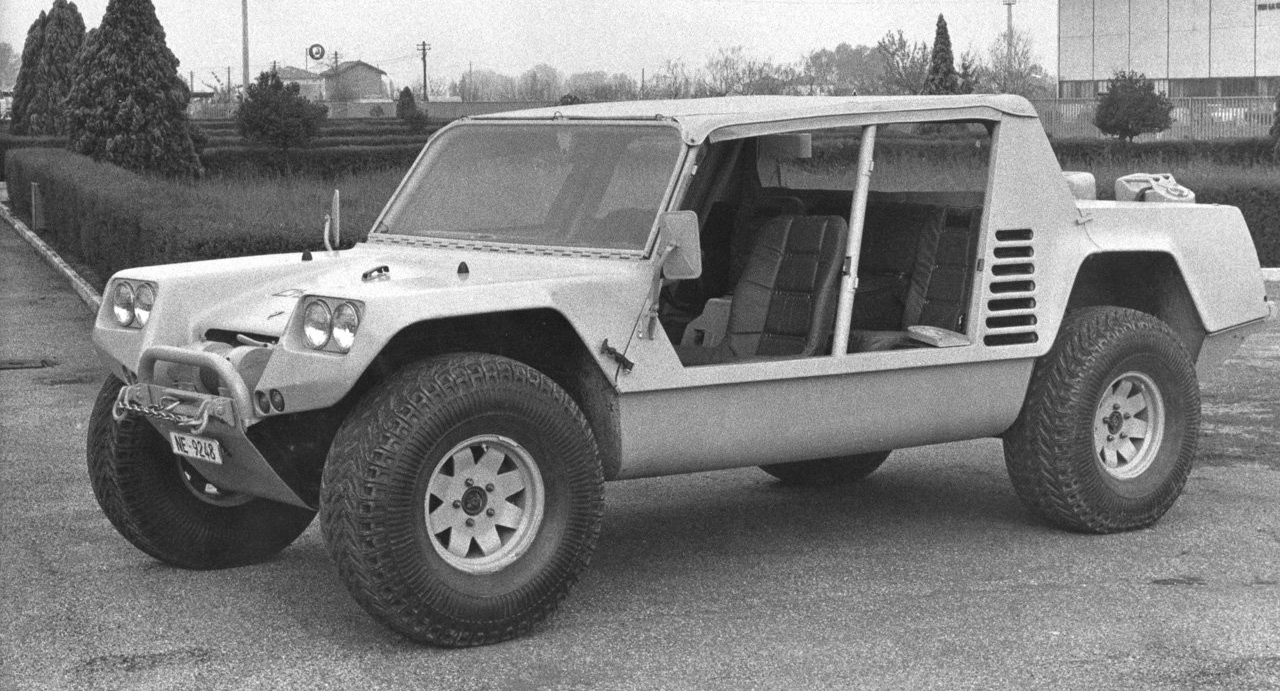
Lamborghini Cheetah Rene Leimer в поиске точки приложения имевшихся мощностей фирма приняла участие в проректе создания тяжелого внедорожника Lamborghini Cheetah для армии США. Он заключил контракт с Mobility Technology International.( ... It was designed by Rodney Pharis, president of US based defense contractor Mobility Technology International. Трансмиссия: постоянный полный привод без понижающей передачи, с тремя автоматическими блокировками и возможностью принудительно заблокировать межосевой дифференциал. КП - TorqueFlite А727. (Читать статью на сайте) |
|---|
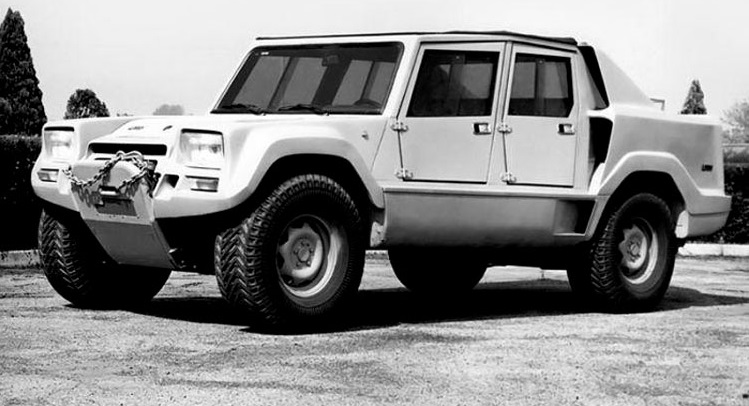
Lamborghini LM 001 Братья Mimran, Жан-Клод и Патрик, реишили взяться за проект супервнедорожника Cheetah, возродив его под кодовым индексом LM (Lamborghini Militaria) Они пригласили на должность технического директора выдающегося инженера Джулио Альфьери из Maserati. |
|---|
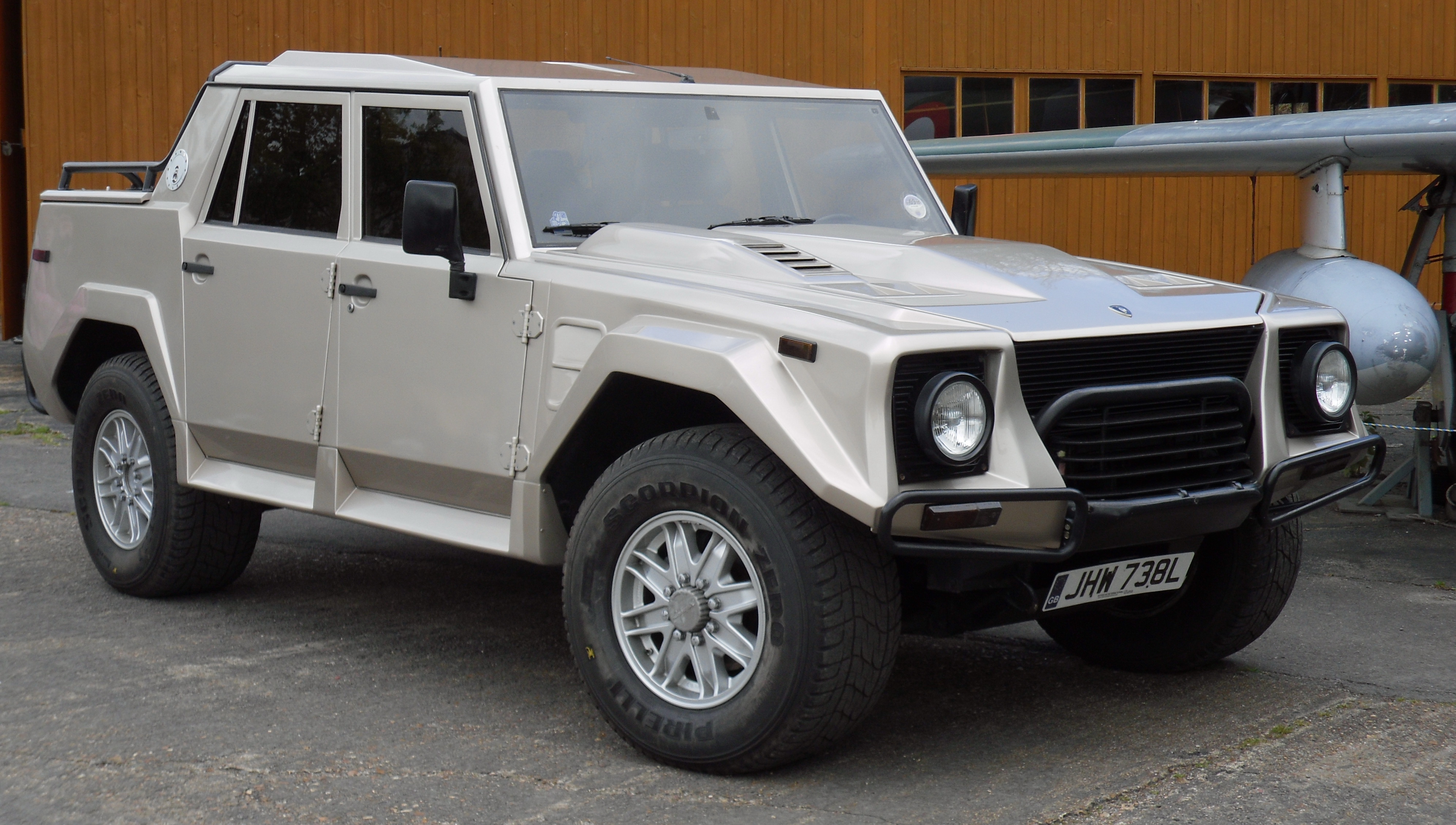
Lamborghini LMA 002 (Lamborghini Militare Anteriore, o Alfieri) The LMA-002 (with the 'A' for Antiore) was the logical follow up of the LM-001, because on the latter one, the engine was in the back, its road holding was terrible, but on the LMA-002 the engine was moved to the front. On this LMA-002, which remained a unique prototype, the four-wheel drive was not permanent, it was possible to transfer the power to the rear wheels only, and a 'real' five-speed ZF gearbox was installed, replacing the automatic transmission used in the LM-001. |
|---|

|
|---|
Lamborghini в середине 80-х годов находилось в трудном финансовом положении: нефтяной кризис сократил спрос на суперкары, потреблявшие много топлива, от закупки её тракторов отказалась Южная Африка, из-за военного переворота сорвался крупный контракт на их поставку в Боливию.
Ферруччо Ламборгини пришлось продать свой бизнес. Тракторное производство выкупил итальянский концерн SAME , автомобильное на 51% перешло к частному швейцарскому инвестору Georges-Henri Rossetti. А в 1974-м Ферруччо уступил оставшийся пакет акций другому швейцарцу — Rene Leimer.
В поиске точки приложения имевшихся мощностей фирма приняла участие в двух проектах -
первый - создание тяжелого внедорожника для армии США
второй - создание супекара BMW M1 по проекту M26 (Giugiaro-designed M1 Procar)
A famous Lamborghini customer, Walter Wolf, the Formula One team owner, then entered the picture. Capellini and Wolf drew up a contract, in which Wolf would become the new owner of the company. 1.2 million doll. would be paid to Rosetti and 800.000 to Leimer. But the offer wasn't sufficient for the Swiss duo, and the deal evaporated.
It a desperate attempt to sustain the engineering capabilities that existed at the factory, two promising (or disastrous as it would turn out) project arrived al the Lamborghini door.
The first of these was the worst. MTI {Mobility Technologv International) an American company, wanted Lamborghini to develop an extreme off-road vehicle capable of climbing through all sorts of terrain at very high speeds for military purpose. While Lamborghini and the young engineer Franco Baraldini started on the off-roader. MTI got into copyright disputes with Ford over allegations that the car was a copy of the Ford XR 311.
When the finished car was shown at the Geneva Motor show in 1977, it was displaced as the Lamborghini Cheetah. Not surprisingly, money to develop the vehicle further wos non existent and the car disappirared from sight (but would later resurface as the mighty LM-series).
The second project was far more promising Luigi Capellini, the senior engineer introduced BMW to the factory and secured an agreement to develop the new E26 project, the BMW M1 supcrcar. Four prototipes were commissioned by the German. Soon afterwards, BMW approved the car and entered into a production agreement with Lamborghini. BMW would supply components on credit and prepay for parts acquired by Lamborghini from outside suppliers. This was, on paper, a highly attractive contract for Lamborghini, and Dallara worked hard on the suspension and tyre programm of the M1 in parallel with thc new Coumach LP40O S.
Again, money was non-existent, and Lamborghini had to ask BMW for 500,000 doll loan. Not surprisingly, the German factory lost confidence and decided it was too risky to invest such amounts of money into an Italian sports car firm that would have been long since shot if it was a real bull.
The Cheetah and the BMW supercar projects were not only stranded because of financial problems, they also created tension among the leading figures at the factory. Leimer and Baraldini were enthusiastic about the Cheetah project, while Capellini regarded it as a waste of resources. Baraldini left and his place was taken over by Marco Raimondi.
Bizarrely, Capellini and Raimondi then set up ltal-Engineering to liberate the components needed to see the MI go into production. Other Italian companies built various parts, before Baur assembled the car in Germany. Which meant that just as Lamborghini sunk to the bottom of the sea without а managing director or a financial controller, the BMW Ml entered production.
Capellini felt he had done his almost to keep Lamborghini alive, as these from a 1979 interview with Sportscar World show:
"I put everything into trying to keep Lamborghini afloat, and for three years I succeeded. I was shattered when the deal with Walter Wolf wasn't going to go through. That was our big hope. After that failed, I struggled on and got the government money. But it became impossible for me to stay on any longer than mid 78. The situation had become so bad that there was no opinion but controlled administration, take-over or bankruptcy. And if the company is taken over by someone with the money and the know-how to make it work, they would not want to keep me on. There would have to be a scapegoat and as managing director I would have been it. I am sorry it has ended like this. I really love Lamborghini. But the whole history of the company is full of mistakes, each one linked to the next, and my task, coming in when the factory was on the verge of collapse, proved to be impossible. For 18 months, Leimer, Baraldini and I worked well together. But the Cheetah came between us and fractured the relationship."
По программе HMV (High Mobility Vehicle) в США разворачивались работы по созданию транспортного средства, способного удовлетворить возросшим требованиям военных для замены стандартного джипа M151 (выпускался с 1959 по 1982 год фирмами Ford, Kaiser, AM General), для чего был объявлен конкурс.
Бороться за контракт стали " American LaFrance,
FWD,
General Dynamics/Chrysler,
FMC (Food Machinery Corp.),
Teledyne
AM-General .
Конкурсный прототип тяжелого джипа был разработан также калифорнийским КБ Mobility Technology International (MTI), входившим в Chrysler, и отправлен на фирму
Automobili Ferruccio Lamborghini S.p.A. для доработки.
Весной 1977 года образец под именем Lamborghini Cheetah («Гепард») был показан а Женевском автосалоне.
Lamborghini и MTI получили судебный иск от концерна Food Machinery Corporation (FMC). Его специалисты в 1969 году разратывали ударный автомобиль XR311, для замены М151. В начале 70-х проект оформился в тактическое шасси, способное нести различное вооружение, превращаться в командирский, медицинский, патрульный или разведывательный автомобиль. Получился внушительных размеров заднемоторный полноприводный багги грузоподъёмностью 680 кг, рассчитанный на экипаж из трёх человек, сидящих в ряд. Полезный груз размещался за их спинами. Ко времени описываемых событий таких машин построили около дюжины. Они успели принять участие в тестах и даже заинтересовали Пентагон.
A MTI взяла XR311 за основу своей машины и лишь переделала салон. Багги стало четырёхместным с отдельными сиденьями в два ряда и широкой грузовой площадкой между ними. База машины сократилась на 70 мм, общая длина — на 20. Масса тоже заметно уменьшилась, главным образом за счёт стеклопластикового кузова. Была доработана независимая подвеска на двойных поперечных рычагах и улучшенны тормоза (в .
Двигатель Chrysler LA 318 уступил место более современномц LA 360. Трансмиссия тоже была схожей: постоянный полный привод без понижающей передачи, но с тремя автоматическими блокировками и возможностью принудительно заблокировать межосевой дифференциал. В качестве коробки использовался простой и надёжный трёхступенчатый крайслеровский автомат TorqueFlite А727.
Схожесть XR311 и Lamborghini Cheetah продолжалась в конструкции пространственной рамы, шасси и даже архитектуре водительского места с неперпендикулярным направлению движения рулевым колесом. Шины, несмотря на разный рисунок протектора, тоже были конструктивно одинаковы. Они предполагали возможность работы на низком давлении. Чтобы избежать разбортирования на ходу, шины на дисках удерживали прообразы современных «тайр-локов» — вставленные внутрь бескамерных покрышек камеры малого диаметра, при сильном накачивании намертво прижимавшие закраины шины к ободу.
Lamborghini Cheetah существовал в единственном экземпляре. Для военных был снят рекламный ролик о том, как Cheetah преодолевает песчаные и каменистые косогоры, и проходит брод глубиной по ветровое стекло.
Дальше этого дело не пошло. Военные отклонили представленный образец в связи неудовлетворительной управляемостью и недостаточной мощностью двигателя.
За срывом этого контракта, на который фирма потратила много средств в том числе и финансовых, последовал выход из другого контракта с BMW.
Итальянский суд всё откладывал решение о ликвидации предприятия и наконец передал фирму во внешнее управление братьям Мимранам — Жан-Клоду и Патрику, ценителям итальянских суперкаров, швейцарским миллионерам и владельцам сахарной империи в Сенегале.
Они пригласили на должность технического директора выдающегося инженера Джулио Альфьери из Maserati и реишили взяться проект супервнедорожника Cheetah возродив его под кодовым индексом LM (Lamborghini Militaria).
1987 : Chrysler announces Lamborghini purchase The Chrysler Corporation announced its pending purchase of Lamborghini. Lamborghini had been through a tumultuous series of financial difficulties since its founder Ferrucio Lamborghini sold out of the company in 1974. The company had been owned by a group of Swiss businessmen who kept the Lamborghini name. Riding the sales of the Countache, the company's popular but impractical 1971 release, they stayed above water until 1978, when they were forced into bankruptcy. Lamborghini was purchased by the Mimran family, who owned the company until the mid-1980s. In the early 1980s, Lamborghini produced two new Countaches, the LP500 and the Quattrovalvole. Both cars enjoyed great success. The company's financial status rebounded, and its rebound sparked the attention of the Chrysler Corporation. Chrysler bought the company in 1987, and, in 1988, it released the final Lamborghini Countache, which it called the 25th Anniversary in recognition of the company's founding in 1963. The 25th Anniversary Countache was the most popular ever. It reached a top speed of 184mph, and it traveled from 0 to 60 in five seconds. No one imagined Lamborghini would ever build a better car. In 1990 Chrysler built the Lamborghini Diablo, arguably the crowning achievement in the company's quest to build the ultimate sports car. The Diablo was sleeker than the Countache, and employed the traditional V-12 engine. The Diablo was the first four-wheel drive car road car to break 200mph with its top speed of 204mph. It made 0 to 60 in four seconds. Despite being owned by Chrysler, Lamborghini lived up to its founder's ideals.
| Внедорожные траспортные средства (Land Locomotion – Mechanical Vehicle Mobility LL-MVM) Home |